Silk vs Satin: What’s the Difference?
One is a natural fiber with thousands of years of heritage. The other is a weave pattern. Here’s what actually matters when choosing between them.
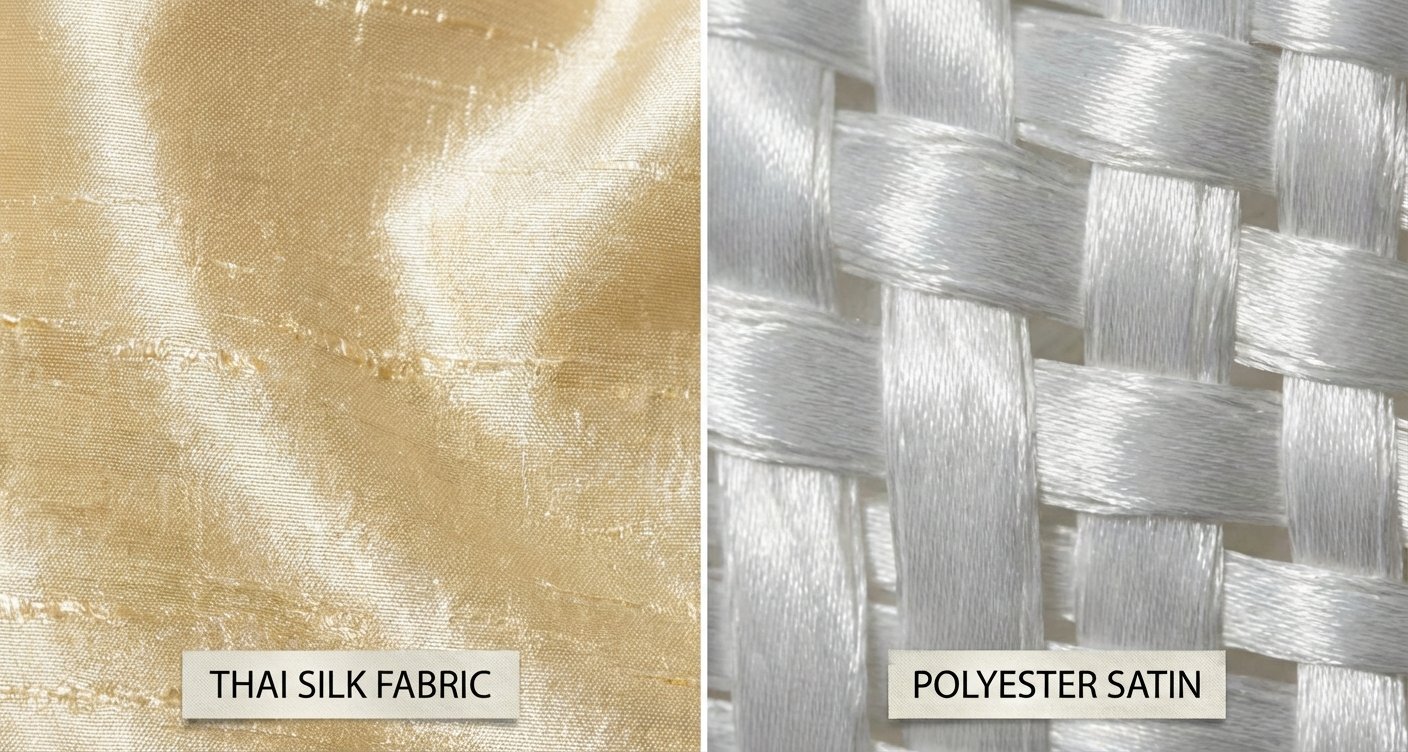
Walk into any fabric shop or scroll through any bedding brand’s website, and you’ll see “silk” and “satin” used almost interchangeably. One promises luxury. The other promises that same luxury at a fraction of the cost. But here’s what most silk vs satin guides won’t tell you: comparing silk to satin is like comparing cotton to denim. One is a raw material. The other is a way of constructing fabric. They belong to entirely different categories.
This guide breaks down what silk and satin actually are, how they differ in ways you can see and feel, and when each one makes sense for your wardrobe, your bedroom, and your budget.
The Fundamental Difference Between Silk and Satin
Silk is a fiber. It comes from the cocoon of the silkworm (Bombyx mori), which spins a single continuous thread that can stretch over a kilometer in length. That thread is a natural protein filament, smooth and triangular in cross-section, which is why silk catches light the way it does. No synthetic process has been able to replicate that structure exactly.
Satin is a weave. Specifically, it’s a weaving pattern where the weft thread floats over multiple warp threads before going under one, creating long uninterrupted stretches of thread on the fabric’s surface. This structure is what gives satin its characteristic shine on one side and matte finish on the other. Satin can be woven from silk, but it can also be made from polyester, nylon, acetate, or rayon.
So when someone asks “which is better, silk or satin?” the answer depends entirely on what that satin is made from. A silk satin is still silk. A polyester satin is polyester with a shiny finish.
For the rest of this guide, when we say “satin,” we’re referring to the most common version on the market: polyester satin. When we say “silk,” we mean the natural fiber, whether woven in a satin weave, a plain weave, or any other construction.
How Silk and Satin Feel
Pick up a piece of genuine silk and a piece of polyester satin side by side. The difference is immediate, even before you look at them.
Silk feels cool against the skin and warms gradually to your body temperature. The fiber has a natural protein structure (fibroin, the same category of protein as human hair) that interacts with moisture and heat in ways synthetics cannot. Thai silk artisans describe quality silk as having a “living” texture. When you run your fingers along the grain, there’s a subtle resistance followed by a smooth release. The fabric breathes. In humid climates like Thailand, this property is not a luxury but a practical necessity, which is one reason silk weaving traditions developed so deeply in Southeast Asia.
Polyester satin feels slippery right away and stays slippery. It doesn’t adjust to temperature. In warm conditions, it can feel clammy because the synthetic fibers don’t absorb moisture. The smoothness is uniform and consistent, which some people prefer for certain applications (more on that below), but it lacks the responsive, adaptive quality of natural silk.
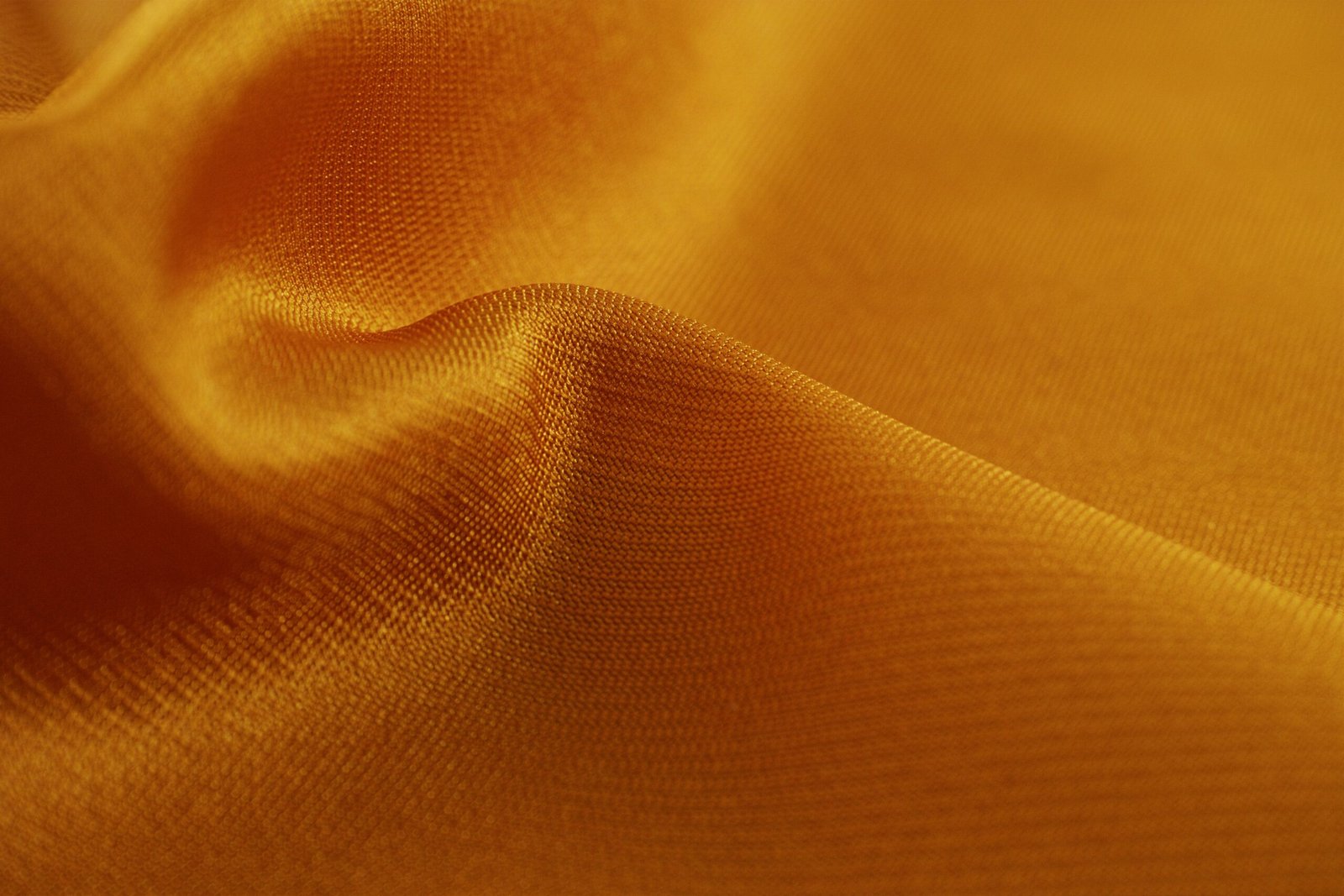
Natural silk catches and refracts light at multiple angles, producing a warm glow that synthetic satin cannot replicate. Photo: Engin Akyurt / Pexels
How Silk and Satin Look
Both silk and satin have a visible sheen, but the quality of that shine is different.
Silk produces what textile specialists call a “deep luster.” Because the triangular cross-section of each fiber refracts light at multiple angles, silk appears to glow from within rather than reflecting light off the surface. The color shifts subtly as the fabric moves. This is especially visible in traditional Thai silk weaving techniques like mudmee (ikat), where the interplay between dyed and undyed threads creates patterns that seem to shimmer.
Polyester satin has a surface-level shine. It’s brighter and more uniform, almost mirror-like on the face side, with a dull matte back. Under artificial lighting, polyester satin can look impressive. Under natural light, it tends to look flat compared to silk. It also lacks the color depth: a red polyester satin is one shade of red, while a red silk can show hints of burgundy, rose, and copper depending on how light hits it.
If you’re choosing fabric for something that will be photographed or seen under varied lighting, this distinction matters more than you might expect.
Silk vs Satin: Durability and Lifespan
This is where assumptions tend to be wrong.
Silk is one of the strongest natural fibers by weight. A single silk thread has a tensile strength comparable to steel wire of the same diameter. Well-maintained silk garments and textiles can last decades. In Thailand, heirloom silk pieces are passed between generations, and vintage pha sin (wrap skirts) from fifty or sixty years ago still hold their structure and color.
That said, silk is sensitive to specific things: prolonged UV exposure fades it, harsh detergents break down the protein fiber, and rough handling can cause surface damage. It requires informed care (gentle washing with pH-neutral soap, air drying in shade, medium-heat ironing while slightly damp). The care isn’t difficult, but it is deliberate.
Polyester satin is more resistant to the elements. It won’t fade as quickly in sunlight, it can handle machine washing, and it doesn’t wrinkle easily. But its lifespan as a quality fabric is shorter in a different way: polyester satin pills over time, loses its surface sheen after repeated washing, and develops a worn look that can’t be restored. It also doesn’t age gracefully. Where old silk develops a soft patina, old polyester satin just looks old.
For everyday items that you’ll replace regularly, polyester satin’s easy-care properties make sense. For pieces you want to keep, silk wins by a wide margin.
Breathability and Comfort
Silk is naturally thermoregulating. The fiber can absorb up to 30% of its weight in moisture without feeling damp, and it releases that moisture as conditions change. This is why silk works as both a cool summer fabric and a warm layering piece in winter. Traditional silk-producing regions across Asia developed silk partly for this reason: it performs well in heat, humidity, rain, and cool mountain evenings alike.
Polyester satin does not breathe. The synthetic fibers repel moisture rather than absorb it, which means sweat stays on your skin. In bedding, this is the main reason people who switch from polyester satin pillowcases to silk ones often notice an immediate difference in comfort and in how their skin and hair feel in the morning.
Silk vs Satin for Hair and Skin
This has become one of the biggest selling points for both silk and satin pillowcases, so it’s worth addressing directly. The claim is real, but the mechanism differs.
Both silk and smooth satin reduce friction compared to cotton. Cotton’s textured weave grabs hair strands and creates tangles and frizz overnight. Both silk and satin allow hair to glide, reducing breakage and preserving styled hair.
Silk adds a layer that satin cannot: moisture regulation. Silk absorbs excess oil without stripping your skin or hair, and it doesn’t create the static charge that polyester generates. Dermatologists who recommend silk pillowcases specifically point to the natural protein structure as being more compatible with human skin and hair.
Polyester satin provides the friction reduction at a lower price point. For someone primarily concerned with reducing hair breakage, a quality satin pillowcase will make a noticeable difference. It won’t match silk’s moisture and temperature regulation, but the surface smoothness alone solves the most common complaint.
How Much Does Silk Cost vs Satin?
Here’s an honest breakdown.
Polyester satin is affordable. A satin pillowcase might cost $5 to $15. A satin blouse runs $20 to $60. The raw material is cheap and the manufacturing is fast.
Silk costs more, and the range is wide. A mulberry silk pillowcase (19 momme, a standard weight measure) typically runs $30 to $80. A Thai silk scarf from a quality producer might range from $40 to $200+ depending on the weaving technique, thread count, and whether natural dyes were used.
In Thailand’s Royal Peacock certification system, there are four tiers of silk quality. At the top, Royal Thai Silk (Gold Peacock) must use native Thai silkworm breeds, hand-reeled thread, hand-operated looms, and natural or eco-friendly dyes. Every step is manual. A single piece of Gold Peacock certified silk can take weeks to produce. At the accessible end, Thai Silk Blend (Green Peacock) allows modern production methods and mixed fibers, bringing the price down significantly while still requiring genuine silk as the primary component.
The price difference between silk and polyester satin is real, but it reflects a difference in material, craftsmanship, and longevity that’s equally real.
Silk vs Satin at a Glance
When to Choose Silk vs Satin
Choose Silk When…
- You want something that will last years or decades
- Comfort over extended wear matters
- You’re investing in quality bedding
- The item will be seen under varied or natural lighting
- You value natural and traditional craftsmanship
Choose Satin When…
- Budget is the primary concern
- You plan to replace the item regularly
- Easy machine washing matters most
- It’s for costumes or event-specific use
- You’re testing if silk benefits work for you
There’s no shame in choosing satin for the right application. The issue is only when satin is marketed as equivalent to silk, or when buyers don’t realize what they’re actually getting.
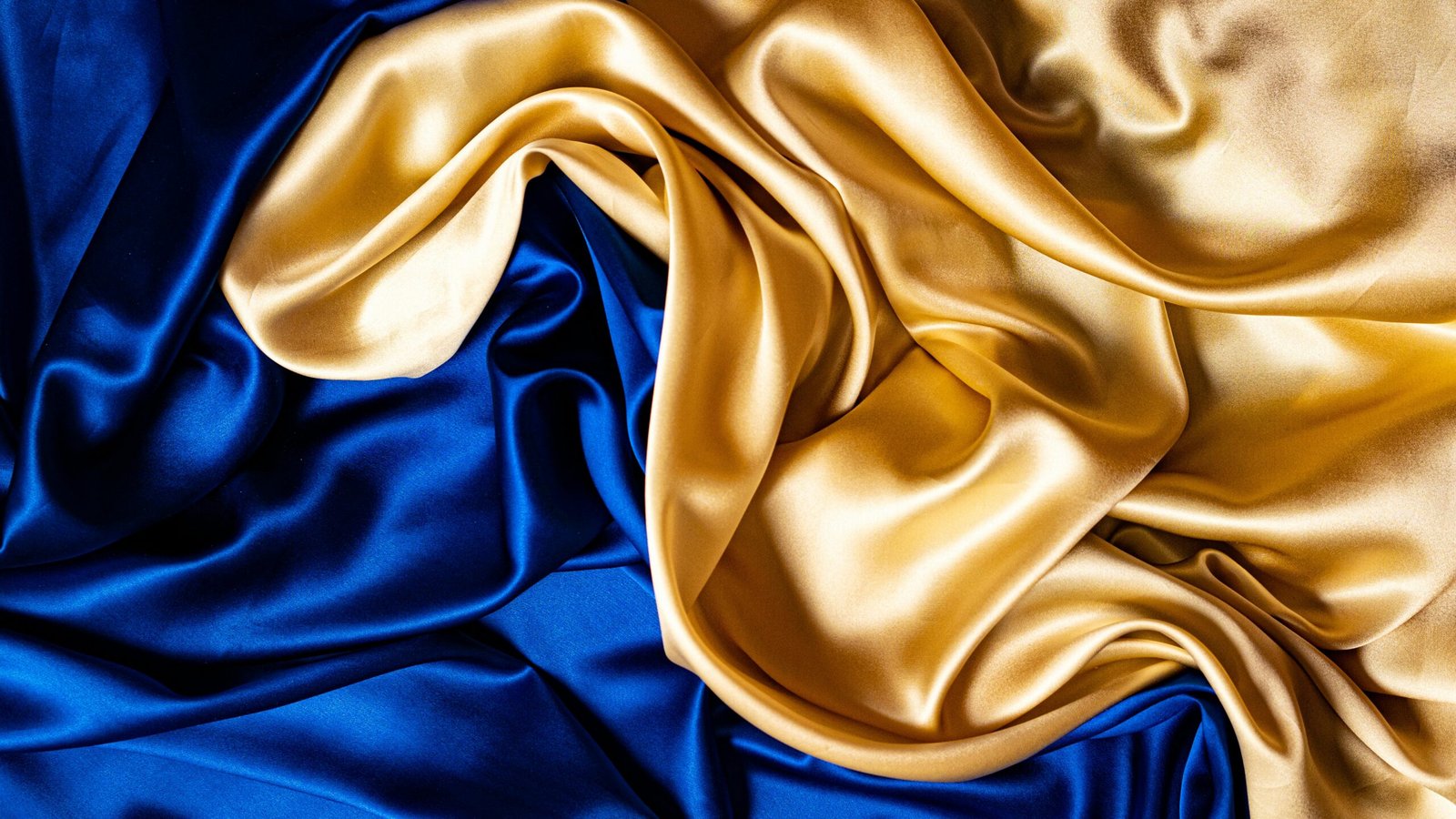
Silk’s color shifts as viewing angle changes. This blue and gold fabric shows the multi-tonal depth that polyester satin lacks. Photo: Mikhail Nilov / Pexels
How to Tell Silk from Satin
If you’re shopping and unsure whether something is silk or polyester satin, here are the most reliable methods:
Check the label. Real silk will say “100% silk” or “100% mulberry silk.” If it says “satin” without specifying the fiber content, it’s almost certainly polyester. In Thailand, look for the Royal Peacock mark, which certifies genuine Thai silk across four quality tiers.
Touch test. Rub the fabric between your fingers. Silk generates warmth from friction. Polyester stays cool and slippery no matter how long you rub it.
Look at the price. If a “silk” pillowcase costs under $15, it is not silk.
The burn test (for fabric swatches only). Burn a small thread in a safe environment. Silk smells like burning hair (it’s a protein fiber), leaves a crushable ash, and self-extinguishes. Polyester melts into a hard bead, smells chemical, and keeps burning.
Thai silk in particular has a distinct character. The slightly rougher texture of hand-reeled Thai silk (compared to ultra-smooth Chinese mulberry silk) gives it a warmth and personality that many collectors and designers specifically seek out. It’s one of the reasons Thailand’s Department of Sericulture created the four-tier Royal Peacock certification to protect its authenticity.
The Bottom Line
Silk and satin are not two versions of the same thing. Silk is a natural fiber with thousands of years of heritage, remarkable physical properties, and a quality that synthetics have not matched. Satin is a weave pattern that can be applied to many fibers, including silk itself. Polyester satin borrows silk’s surface appearance without its substance.
Both have legitimate uses. But understanding the difference between silk and satin means you’ll never overpay for polyester or undervalue genuine silk.
Sources
- Department of Sericulture, Ministry of Agriculture and Cooperatives, Thailand (กรมหม่อนไหม). Thai Silk Standards and Royal Peacock Certification. qsds.go.th
- SUPPORT Foundation of Her Majesty Queen Sirikit (มูลนิธิส่งเสริมศิลปาชีพฯ). Thai Silk Weaving Techniques and Heritage Preservation. Established 1976.
- SACIT (สถาบันส่งเสริมศิลปหัตถกรรมไทย). Thai Textile Heritage and Conservation. sacit.or.th
- Queen Sirikit Museum of Textiles. Thai Silk Traditions and Weaving Collections. qsmtthailand.org